
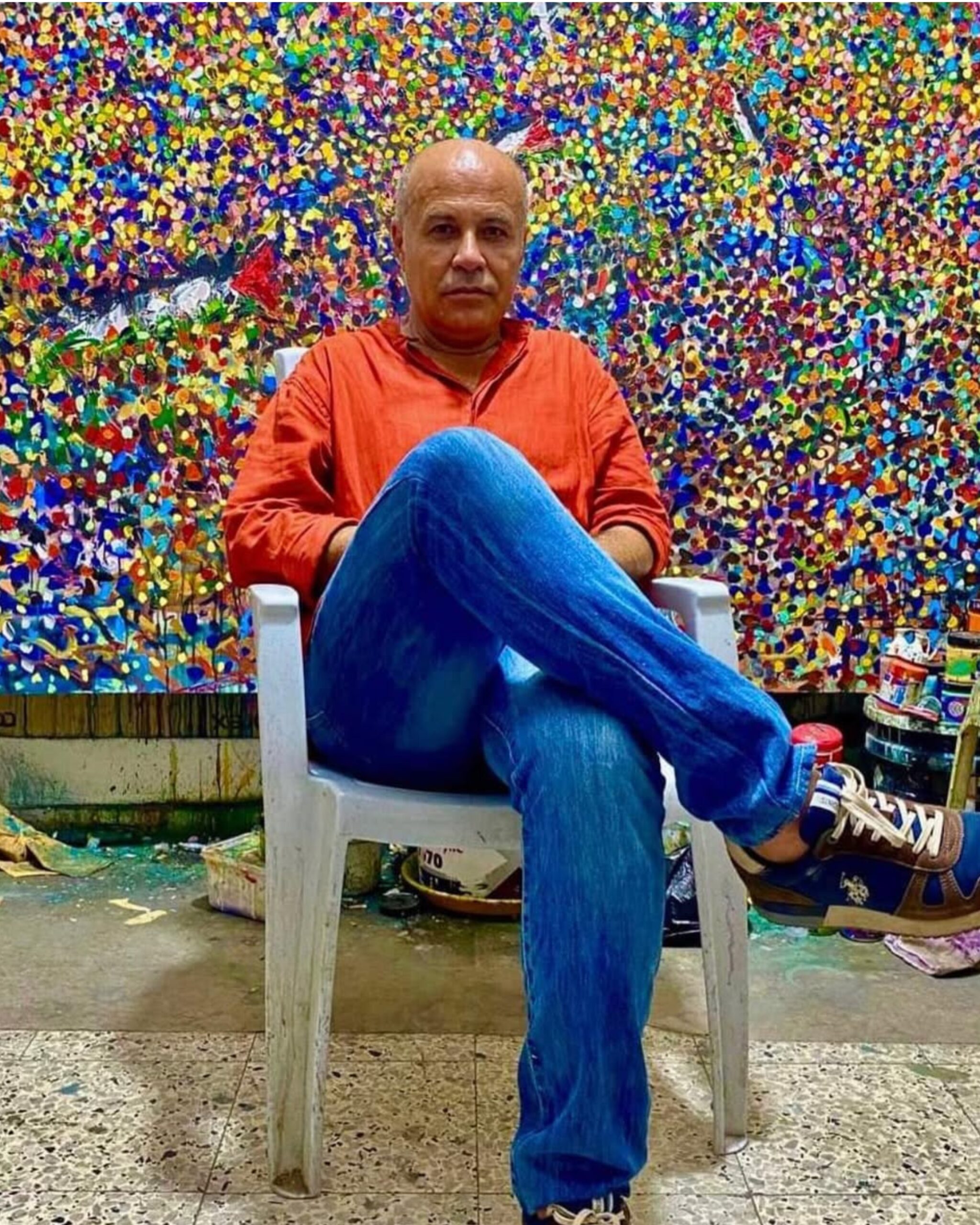
Basel El-Maqosui (b. 1971, Gaza City) is a multidisciplinary artist and a founding member of Windows from Gaza for Contemporary Art. Trained at Darat al Funun in Amman under Marwan Kassab-Bachi, his practice spans painting, photography, and video, often rooted in themes of resilience, memory, and survival.
He has exhibited widely in the Middle East, Europe, and beyond, and his work has been recognized with the Charles Asprey Award (2003), the Union of Arab Photographers Prize in Germany (2008), and the Nile Culture Biennale Award in Cairo (2009). Alongside his artistic career, El-Maqosui has dedicated years to teaching art, leading workshops for children and displaced communities in Gaza.
In recent years, his practice has turned to creating under siege, using found and everyday materials to document life amid destruction. For El-Maqosui, art remains both an act of resistance and a vital means of preserving human dignity.
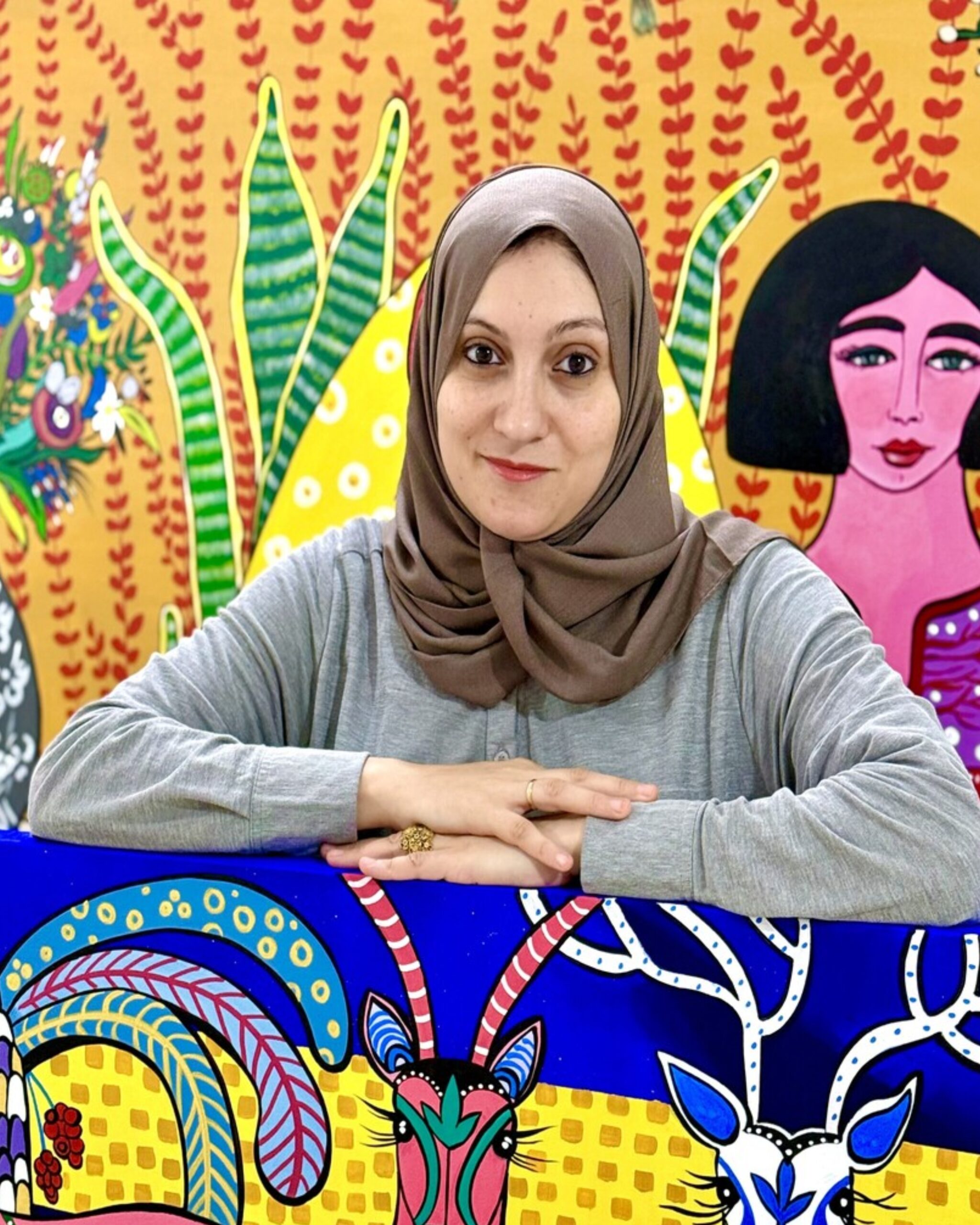
Dina Matar (b. 1985, Gaza) is a Palestinian visual artist whose paintings are distinguished by vibrant colors, playful abstraction, and idyllic scenes of Palestinian life. Drawing on traditional motifs and ornamentation, her work signals both perseverance and resistance, while often centering women as subjects—celebrating their strength, resilience, and daily struggles.
Matar joined the Eltiqa Group for Contemporary Art in 2004 and has since become an active voice in the Gazan art scene. A graduate of Al-Aqsa University with a BA in Fine Art and Education, she has exhibited in Gaza, Ramallah, Jerusalem, France, Switzerland, and London, including at The Mosaic Rooms’ “Occupied Space” (2008). In 2012, she undertook a residency at Cité Internationale des Arts in Paris.
Now based in Sharjah, where she lives with her husband, fellow artist Mohammed Al-Hawajri, and their children, Matar continues to produce work that weaves together memory, ornamentation, and everyday resilience—offering a powerful testament to Palestinian identity and endurance.
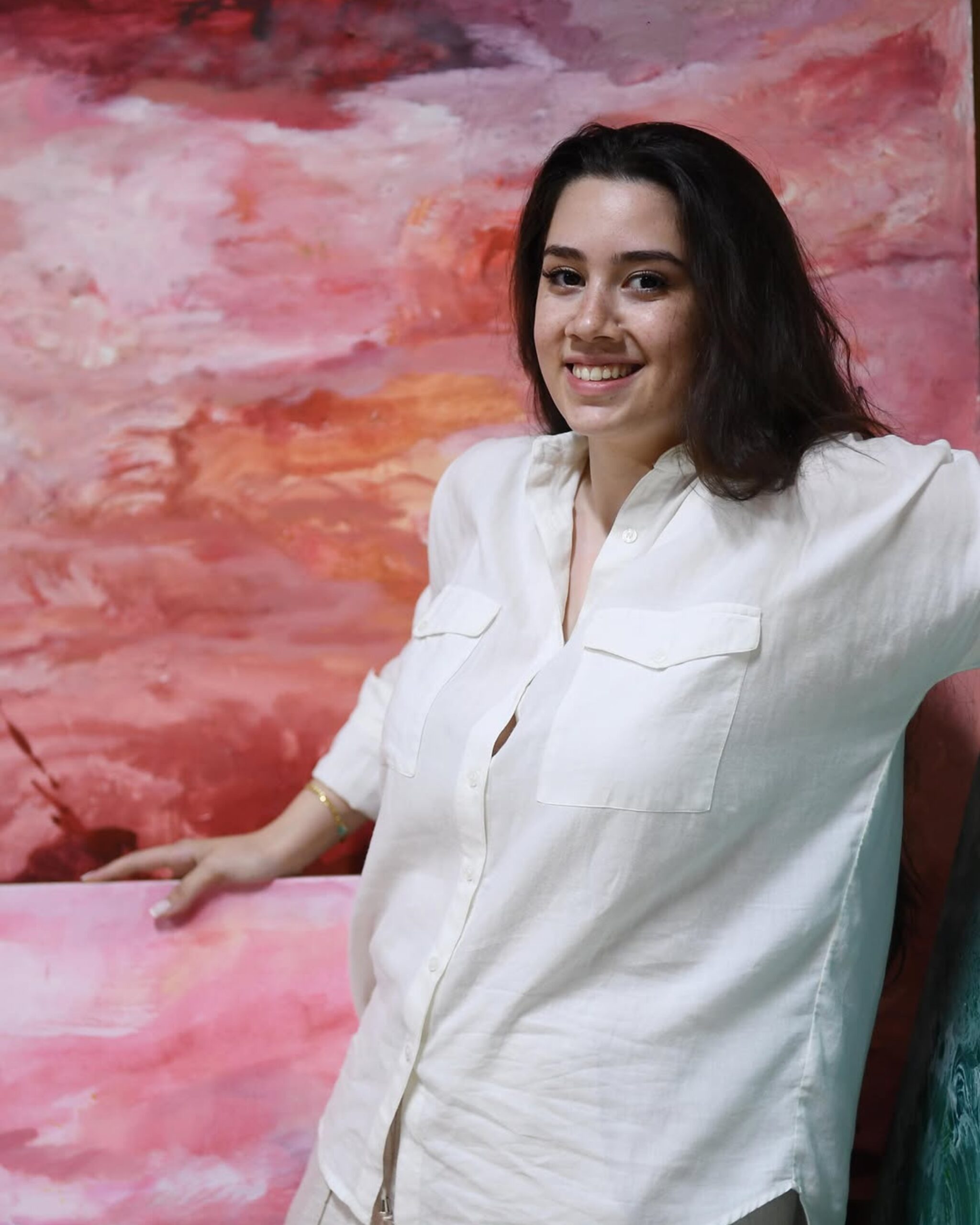
Joumana Mortada (b. 1998) is a Syrian artist and graduate of the Faculty of Fine Arts in Damascus. Since 2019, she has shared her artistic voice through contemporary abstract art, using color to navigate emotion, resilience, and identity. Her work has been exhibited in Syria, Kuwait, Bahrain and the UAE.
For Joumana, art is a means of survival — a way to document, resist, and find solace amid turmoil. Her work captures the shifting emotional landscapes of those who endure, transforming fleeting moments into lasting expressions of persistence and longing. “Ana Huna” (I Am Here) is a personal extension of her ongoing project Shades of Levant, exploring the interplay of memory, transformation, and presence.
Through abstraction, she reclaims lost hues, expressing both the weight of hardship and the quiet power of resilience. The layers of color and form in her work invite viewers to look beyond destruction, recognize beauty in endurance, and find fragments of themselves in her evolving visual language.
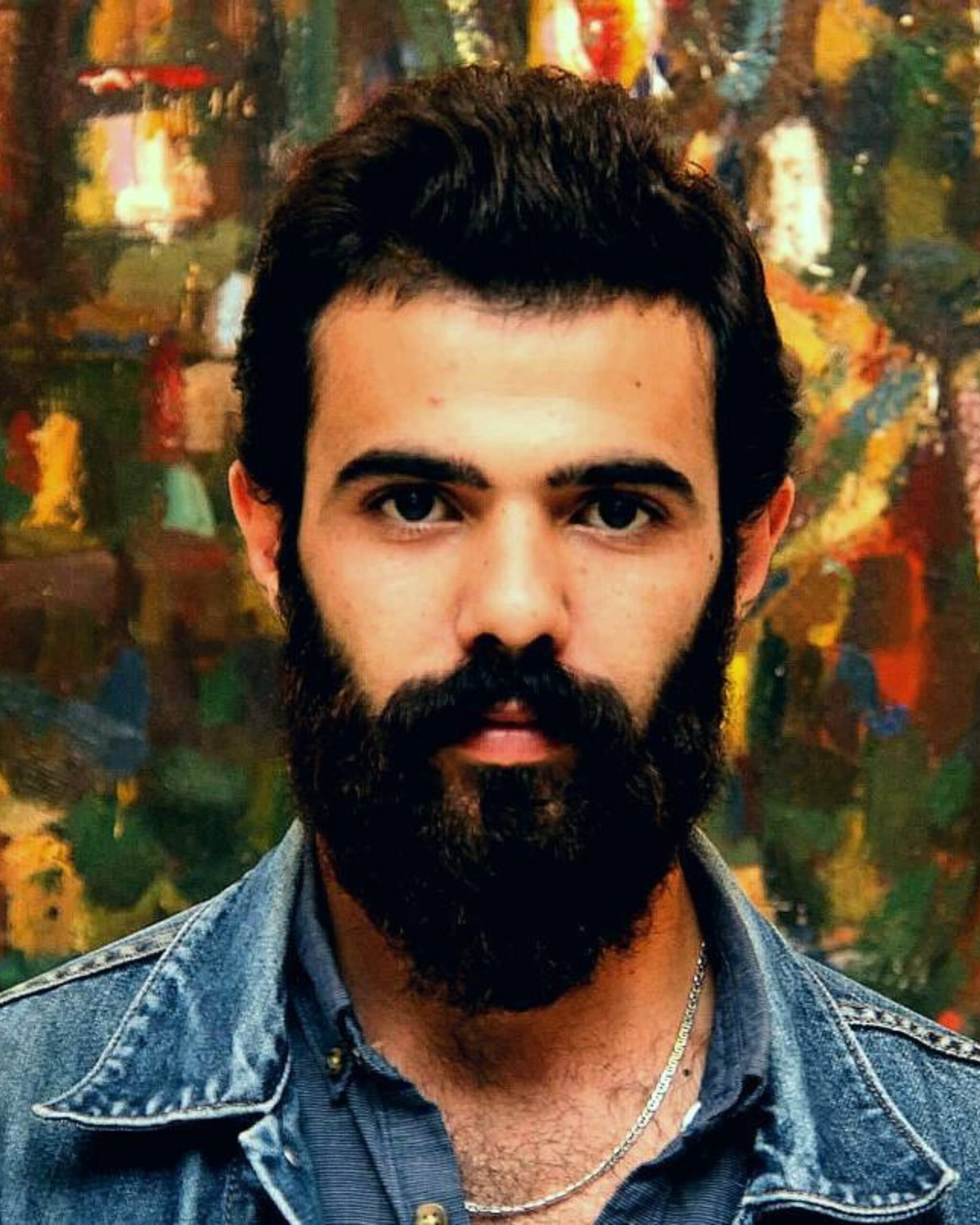
Majd Henawi (b. 1993) is a Syrian visual artist whose practice explores themes of identity, belonging, and the human condition. A graduate of the Faculty of Fine Arts at Damascus University (2017), he is currently pursuing a master’s degree at the same institution and is a member of the Syrian Artists’ Union. From 2018 to 2023, he taught at the Faculty of Fine Arts while leading workshops in collaboration with cultural associations and institutions.
Henawi has exhibited widely in Syria, Lebanon, Turkey, Germany, the UAE, and Tunisia, and his work has been recognized with the Syrian Annual Spring Exhibition Award (2019) and a research grant from Ettijahat’s Ajyal program (2020). His first solo exhibition, Black and White (2019), reflected on the contradictions of human experience through stark contrasts and graphic brushwork. His second, Homeland (2024), examined the complex ties between people and place through vibrant color compositions.
He has also participated in international platforms such as the Carthage Days of Contemporary Art (2019), the Arab Art Exhibition in Beirut (2022), and Expo 2020 Dubai. For Henawi, art is both a humanitarian and social necessity, offering a lens to reflect on the challenges and resilience of contemporary life.
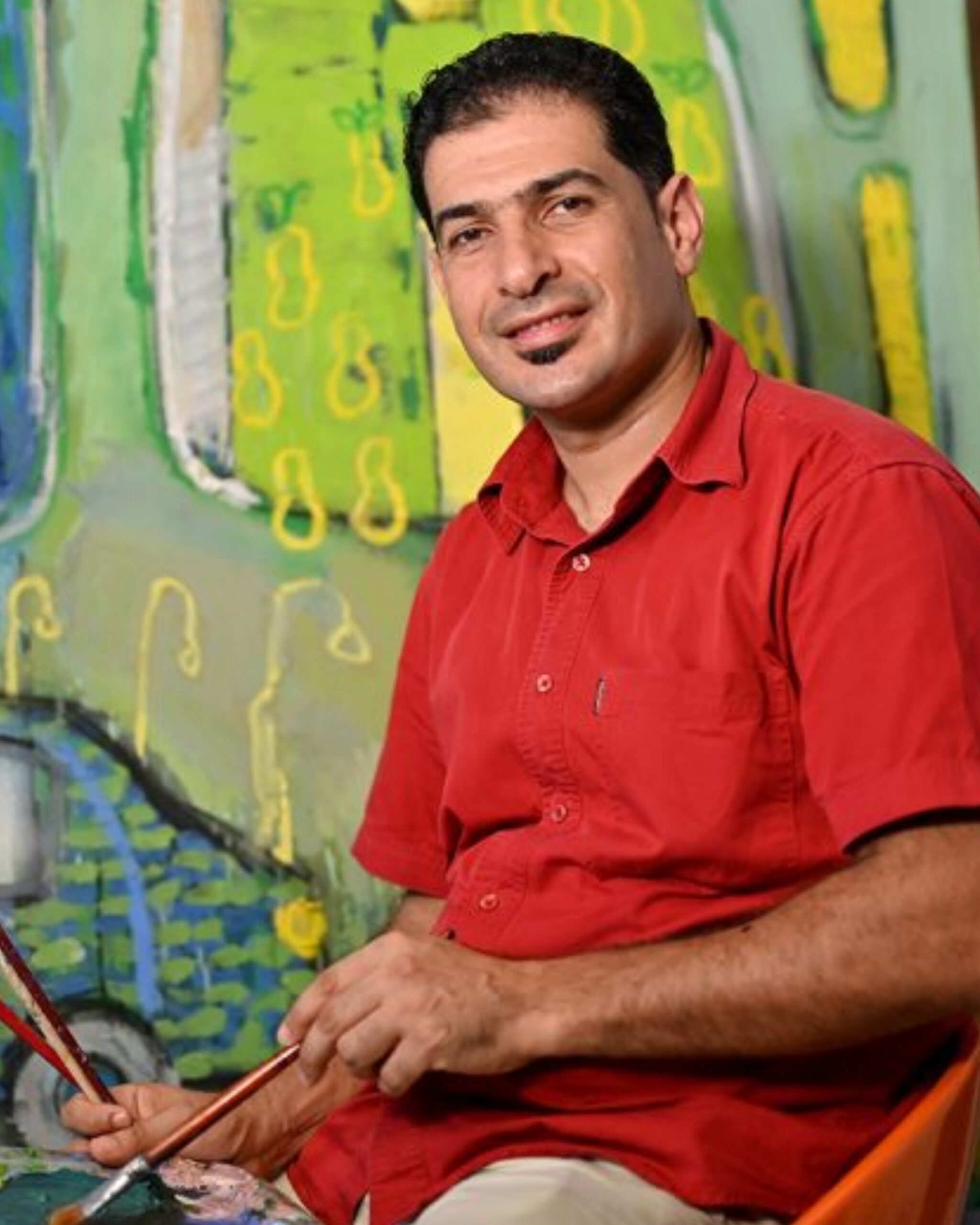
Mohamed Abusal (b. 1976, Gaza) is as a visual artist highlighting the reality of the daily life of Palestinians, while offering alternative and optimistic visions of a better future. Although a graduate in finance and management, Abusal retrained as an artist in 2000, since then he has worked at a prolific rate producing daring and innovative work which has garnered much critical acclaim. Projects have included Metro in Gaza (2012) and Shambar (2013) – concepts comprising installations, designs and photographs – that deal with the reality in besieged Gaza and envisioning a brighter future – a future that is not only plausible but a fundamental human right.
In 2002, he participated in the creation of the artist collective Eltiqa, which was presented at Documenta 2022. In 2005, he received the prestigious Charles Aspry Prize for Contemporary Art. A former laureate of the Cité des Arts in Paris and the Camargo Foundation in Cassis, he exhibited at the Institut du Monde Arabe in “What Palestine brings to the world” in 2023. In 2021, he co- founded the Hawaf collective, which is developing a virtual museum for Gaza, the Sahab Mauseum (Museum of Clouds). This museum, presented at the Mucem in June 2022, was on display at the Palais de Tokyo at ArtExplora in June 2024.
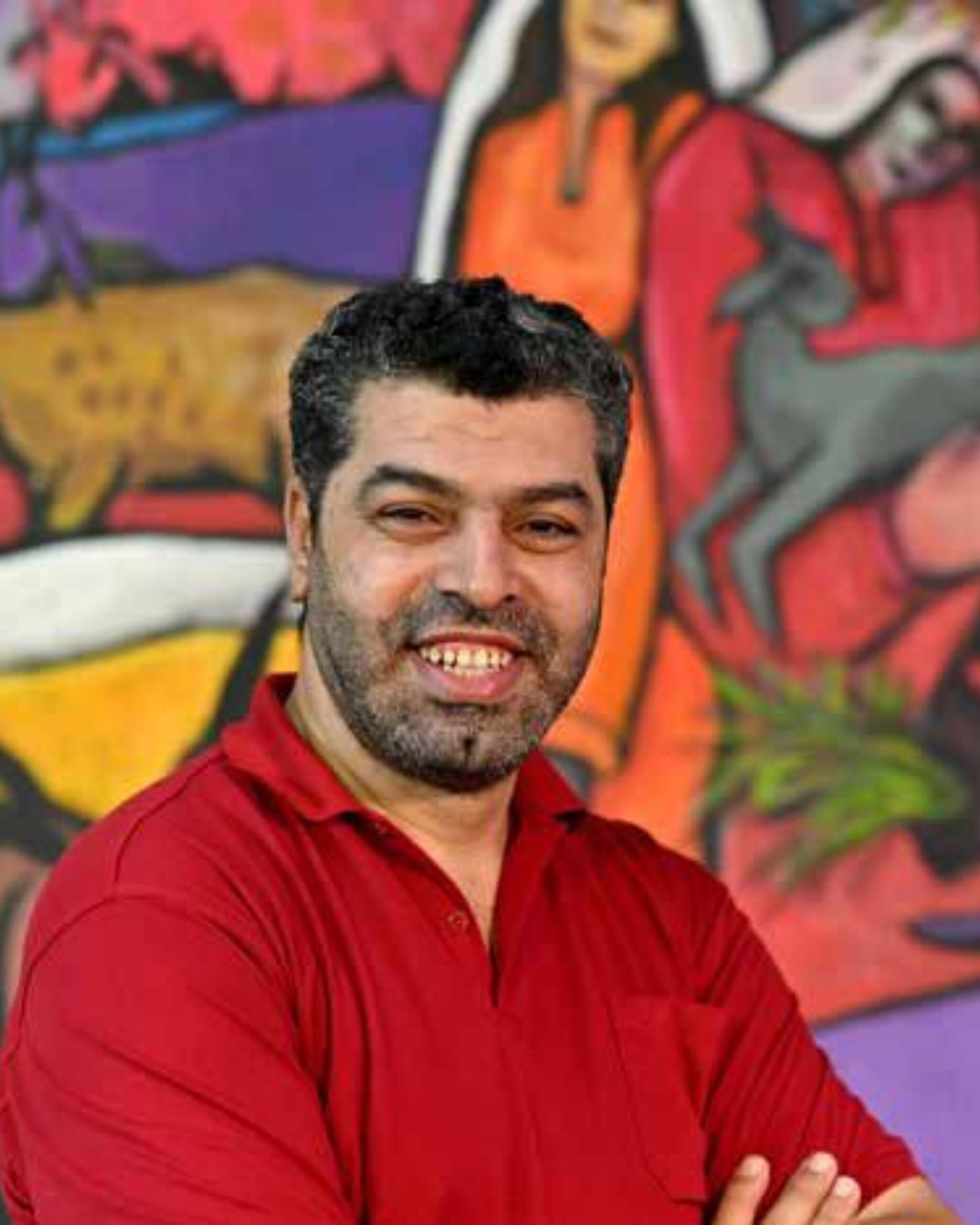
Mohammed Al-Hawajri (b. 1976, Al Bureij Refugee Camp, Gaza) is a Palestinian multidisciplinary artist and a founding member of the Eltiqa Group for Contemporary Art. Active since the late 1990s, his practice spans painting, video, and photography, often incorporating unconventional materials such as household spices and animal bones.
Al-Hawajri has exhibited internationally, including at Documenta 15, where his work was presented in a joint exhibition by the Eltiqa Group and The Question of Funding. His projects frequently reflect on life in Gaza, blending sarcasm and stark reality to comment on socio-political conditions.
Notable works include Cactus Borders, Animal Farm, and Guernica-Gaza, each exploring the intersections of daily survival, political critique, and the resilience of the human spirit.
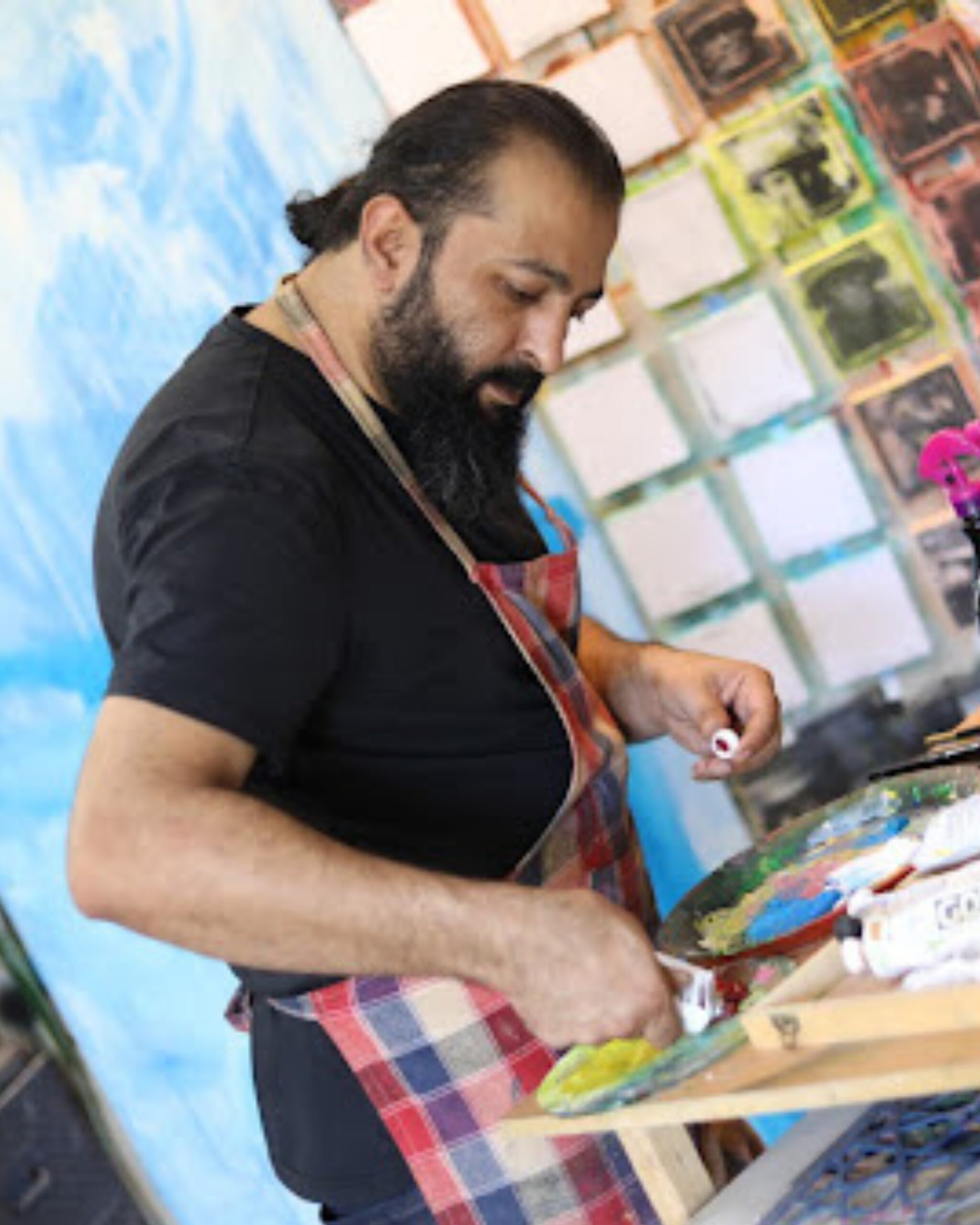
Shareef Sarhan (b. 1976, Gaza City) is a multidisciplinary Palestinian artist and photographer, and a founding member of Windows from Gaza for Contemporary Art. He trained at the Darat al Funun Summer Academy in Amman under Marwan Kassab-Bachi and holds a diploma from the International Correspondence School (ICS), USA.
Sarhan has exhibited widely in the Middle East, Europe, and the US, and his work has been recognized with awards including the Bronze Prize at the Festival of Arab Photographers (2010) and the Oscar Benally International Cultural Award in Cairo (2009). His practice spans photography, installation, and public art, often using reclaimed materials to reflect on life under siege, resilience, and collective memory.
Notable projects include Gaza Living (2012), War Game (2014), and the Gaza Lighthouse (2016), a public installation built from rubble as a beacon of survival. For Sarhan, art is a soft force for change—transforming destruction into symbols of resistance and hope.